Toolkits for Growers

Home / Knowledge Hub / Toolkits for Growers – The 3-Sensor Garden

The 3-Sensor Garden

Read Your Plants Before You Reach for a Bottle

Introduction

Why Farmers Read the Plant First

Walk into any commercial growing operation and ask the head grower what their most important tool is. They won’t say a fertilizer program or an irrigation timer. They will say their eyes, hands, and sense of time,  three sensors that cost nothing and miss almost nothing.

Home growers tend to do the opposite. Something looks off, so they reach for a bottle. Yellow leaves trigger a nitrogen spray. Brown tips trigger more water. Wilting triggers panic. Half the time the intervention makes things worse because the diagnosis was wrong.

This toolkit teaches you to slow down, use your three built-in sensors, and read what the plant is actually telling you before you do anything. That’s how farmers work. That’s how we’re going to work.

CROSS-REFERENCE: Before diagnosing a nutrient problem, make sure your soil is right. See Toolkit No. 1: How to Make Great Soil for full soil recipes and amendment guidance.

🌴 WARM CLIMATE NOTE: In Florida and warm climates, heat stress mimics many deficiency symptoms. Before diagnosing nutrition, rule out temperature stress, especially for tomatoes above 90°F and leafy greens in full summer sun.

SECTION 1

Meet Your Three Sensors

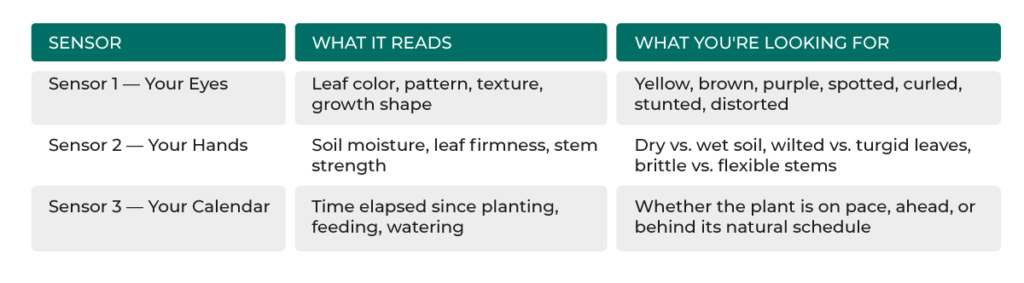
You already carry the three most important diagnostic tools in any garden. No equipment purchase required.

The Three Sensors
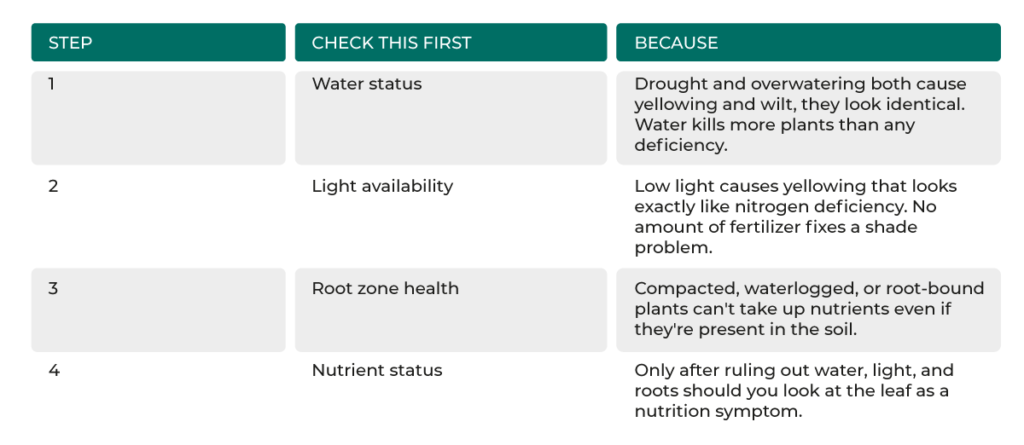
The Diagnosis Order — Always Follow This Sequence

Most misdiagnoses happen because growers skip straight to nutrition. The right order is:

COMMON MISTAKE: Yellow leaves + fertilizer = often more damage. If the plant is overwatered, adding fertilizer salts to a wet, stressed root zone burns roots further. Always check water first.

SECTION 2

Sensor 1 — Water: The First Thing to Rule Out

Water is the most mismanaged variable in home gardens. Both too much and too little kill plants. Before you call anything a ‘problem,’ you need to know the water status of your soil.

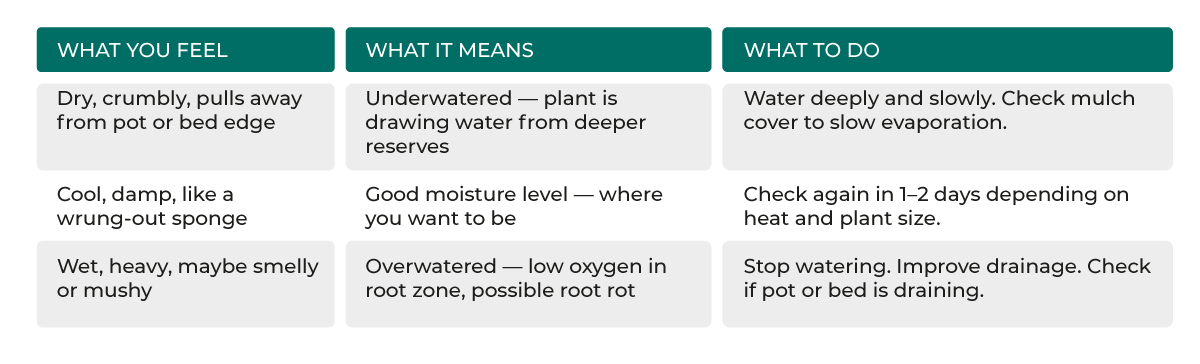
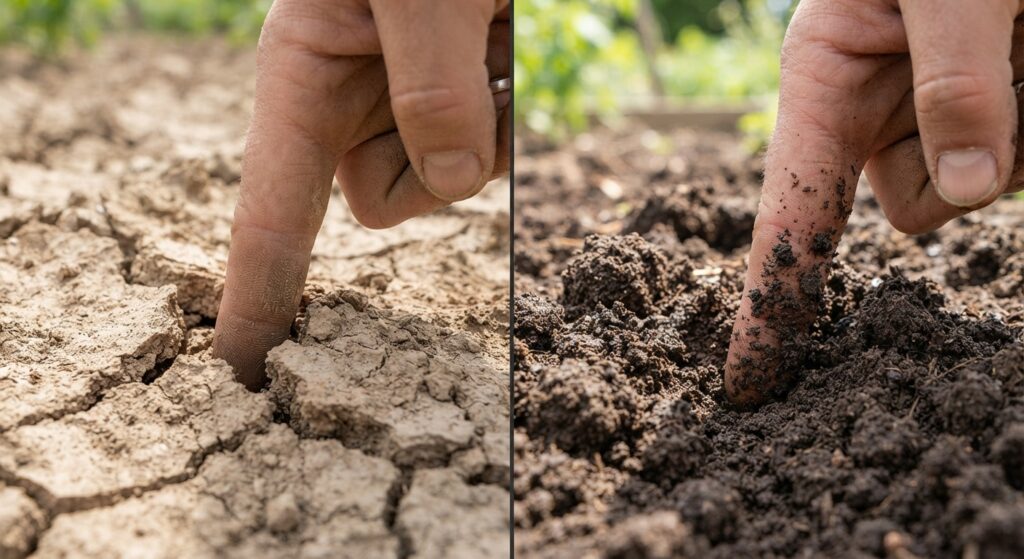
The Finger Test

Push your index finger into the soil up to the second knuckle, roughly 2 inches deep. This is where most vegetable root action happens.

The Weight Test (Containers Only)

Lift the pot. A dry pot is surprisingly light. A wet pot is heavy. Over two or three days, lift your containers each morning and you’ll quickly develop a feel for when they need water without ever putting a finger in the soil. This is one of the fastest skills a container grower can build.

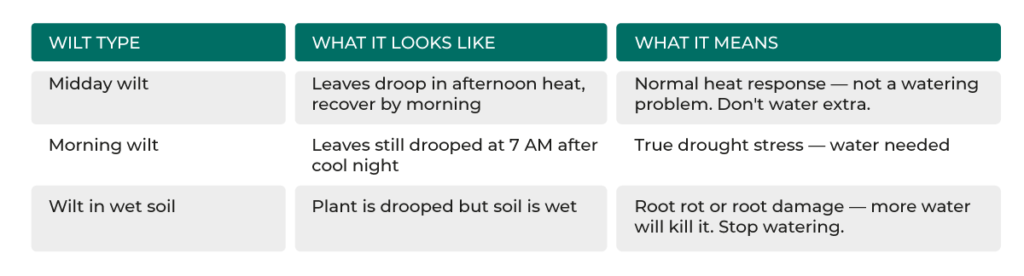
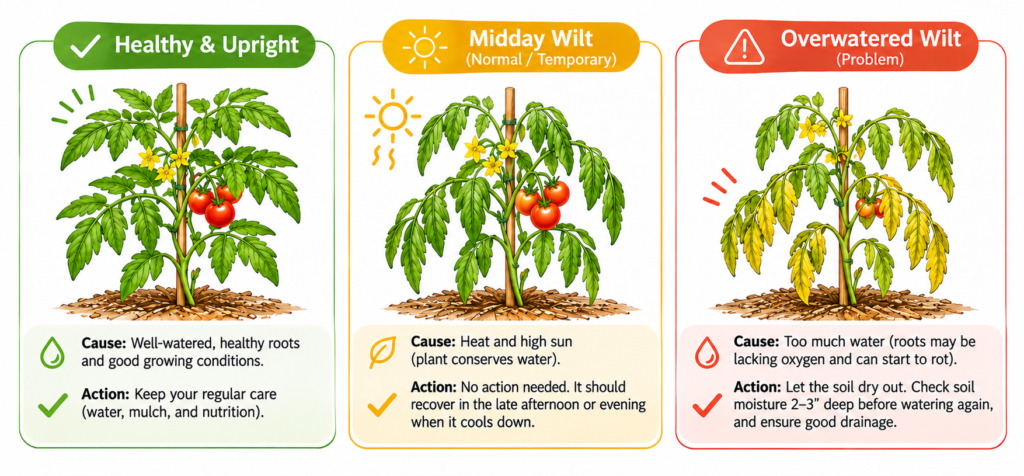
Reading Wilt — Not All Wilt Is Drought

🌴 WARM CLIMATE NOTE: In South Florida and the Gulf Coast during summer, midday wilt is almost universal. Check your plants before 8 AM. If they’ve recovered overnight, the plant is fine. If they haven’t, you have a real water deficit.

Learn this difference and you'll never overwater again

SECTION 3

Sensor 2 — Light: The Most Under-Diagnosed Problem

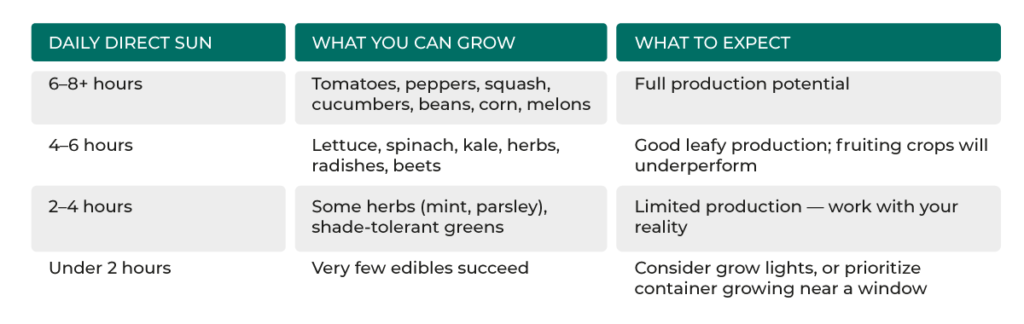
Growers underestimate how much light vegetables need. Most fruiting crops, tomatoes, peppers, squash, cucumbers, need 6 to 8 hours of direct sun to thrive. Leafy greens can do 4 to 6. Below those thresholds, plants start showing symptoms that look exactly like nutrient deficiencies.

Mapping Your Light Hours

Take one day in the first week of a new growing season and map your space properly:

  • Set a timer and check your growing area every hour from 7 AM to 7 PM.
  • Mark each hour as: Full Sun (direct overhead or angled sun hitting leaves), Partial (some direct sun), or Shade (no direct sun).
  • Count the full-sun hours. That number tells you what you can grow.
  • Repeat this mapping seasonally, sun angles shift significantly between summer and winter, and trees leaf out and change the picture.
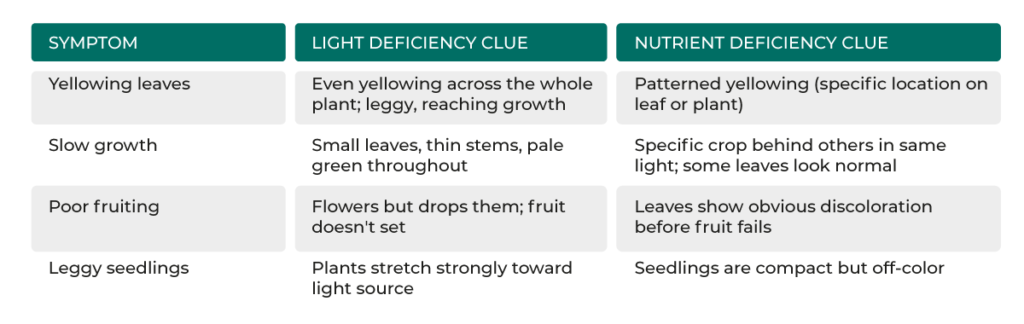
Light vs. Nutrition: Telling Them Apart

This is where many home growers waste money. The symptoms overlap significantly.

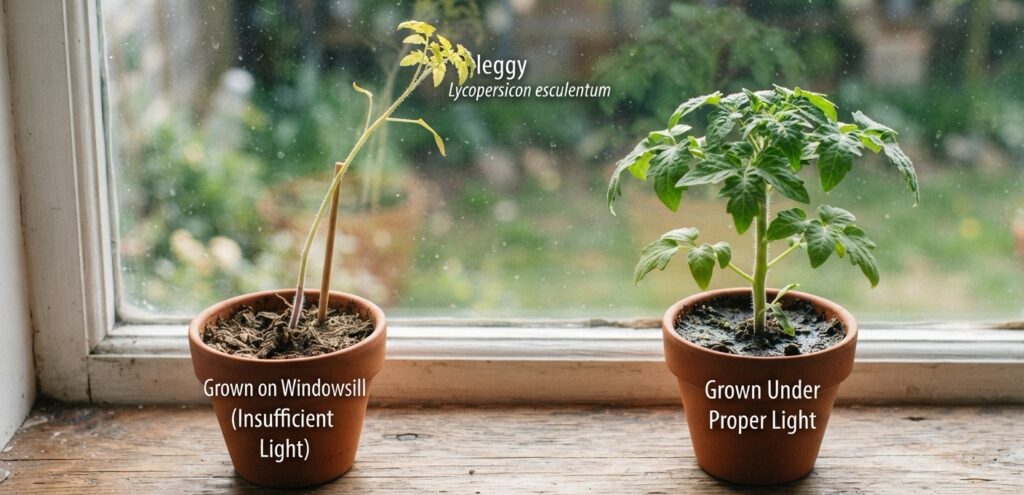
FARMER RULE: If the plant is reaching, stretching stems toward light, one-sided growth, long internodes, it’s a light problem. No fertilizer in the world fixes a shade problem. Move the plant or move the shade.

The stretch is not growth — it's a distress signal

SECTION 4

Sensor 3 — Nutrition: Read the Leaf as a Map

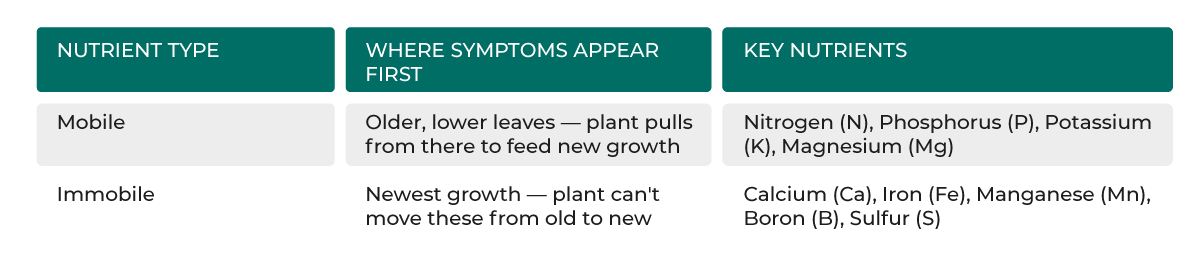
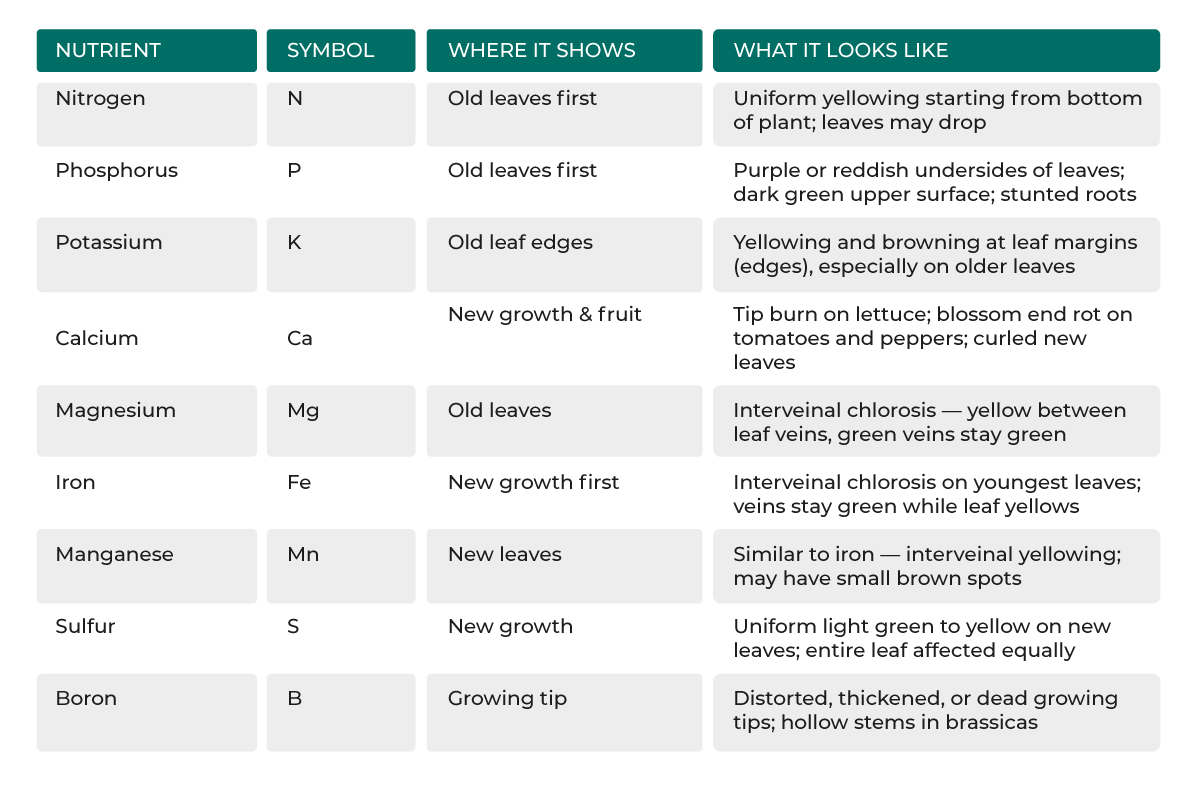
Once you’ve ruled out water and light problems, you can start reading the plant’s leaves as a nutrient map. Plants are organized systems, when they run short of something, they move available resources from old leaves to new leaves (mobile nutrients) or show the problem first in new growth (immobile nutrients). That pattern tells you what you’re looking at.

Mobile vs. Immobile Nutrients — The First Sort
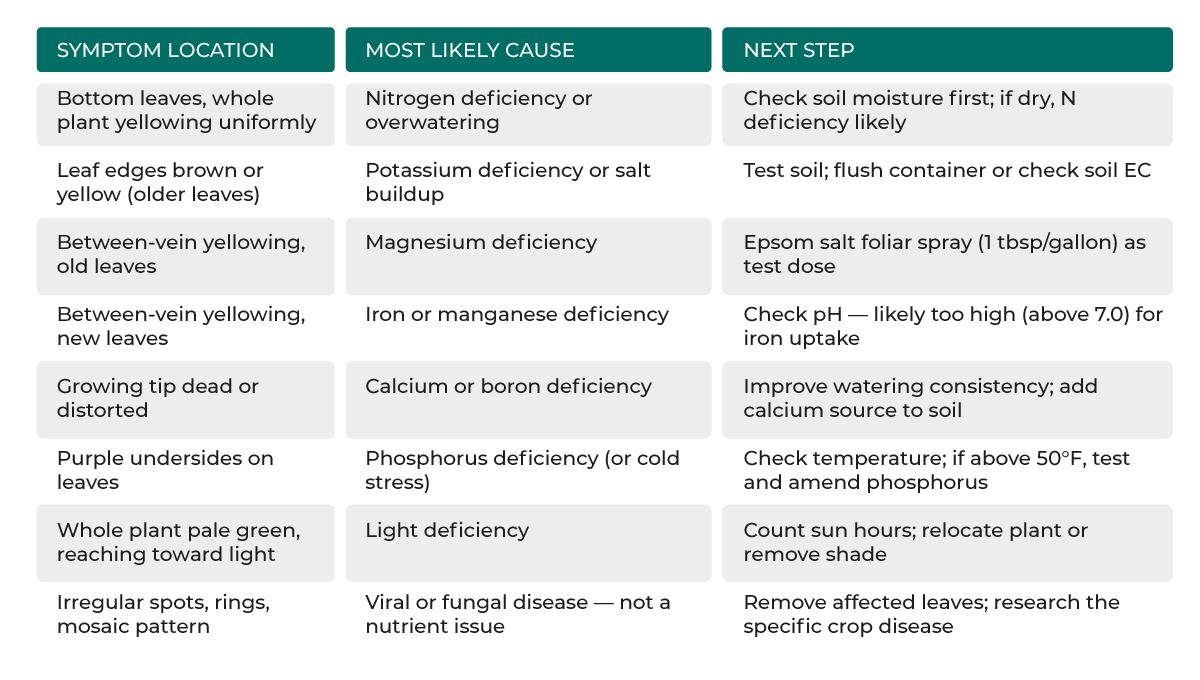
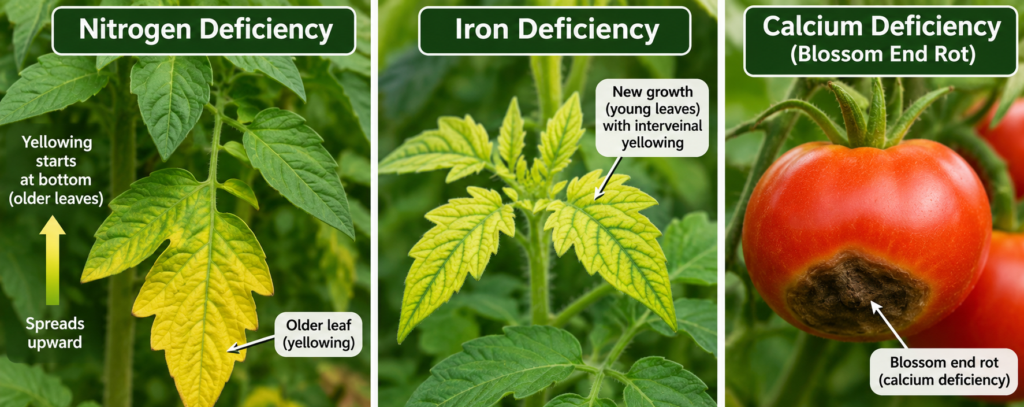
Deficiency Symptom Quick Reference
Before You Treat: Confirm the Problem

Don’t treat a single symptom. Run this confirmation checklist first:

  • Is the symptom isolated to one plant, or do multiple plants show it? (One plant = likely mechanical, root, or disease issue. Multiple = likely environmental or nutrient)
  • What does the soil pH test show? Most nutrient uptake problems in established gardens are pH-related, the nutrient is present but locked out. Check your soil pH before adding any amendments. See Toolkit No. 3 for soil testing guidance.
  • When did you last amend? Overcorrecting a nutrient that isn’t actually deficient can create toxicity and lock out other nutrients.
  • Is it spreading up the plant or staying in one place? Spreading deficiencies are progressing, get ahead of them. Static symptoms may resolve on their own as conditions improve.

OVER-AMENDMENT WARNING: Adding fertilizer to a plant that doesn’t need it is one of the fastest ways to kill it. Salt buildup, pH shift, and nutrient antagonism (too much of one blocks another) are all real risks. When in doubt, do less. Good soil with proper pH feeds most crops without any additional intervention.

🌴 WARM CLIMATE NOTE: In Florida, calcium deficiency is extremely common because of fast-draining sandy soils and high summer rainfall. If you’re seeing blossom end rot on tomatoes or tip burn on lettuce, add crushed oyster shell or gypsum to your beds before your next planting, not calcium spray mid-season.
SECTION 5

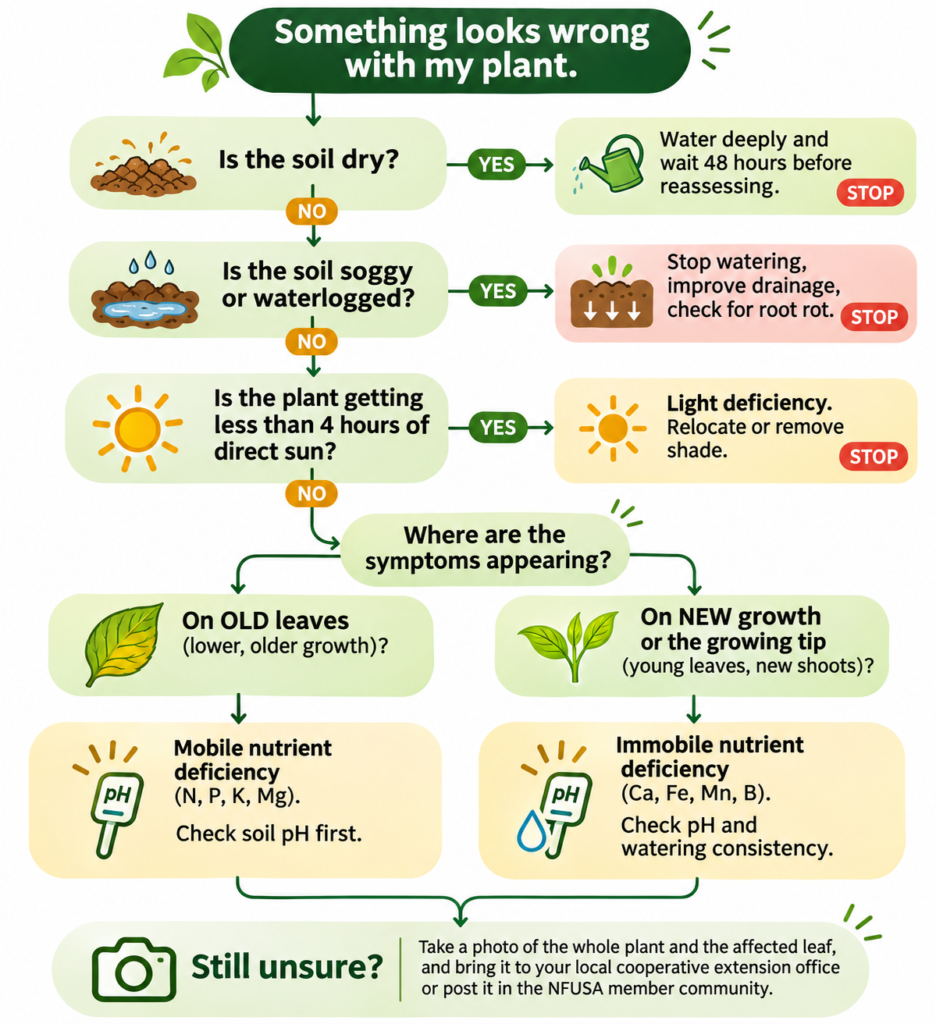
The Symptom Flowchart: One Question at a Time

When something looks wrong, work through these questions in order. Don’t skip ahead. The right answer almost always lives in the first three questions.

Quick-Reference: Symptom Location to Likely Cause

SECTION 6

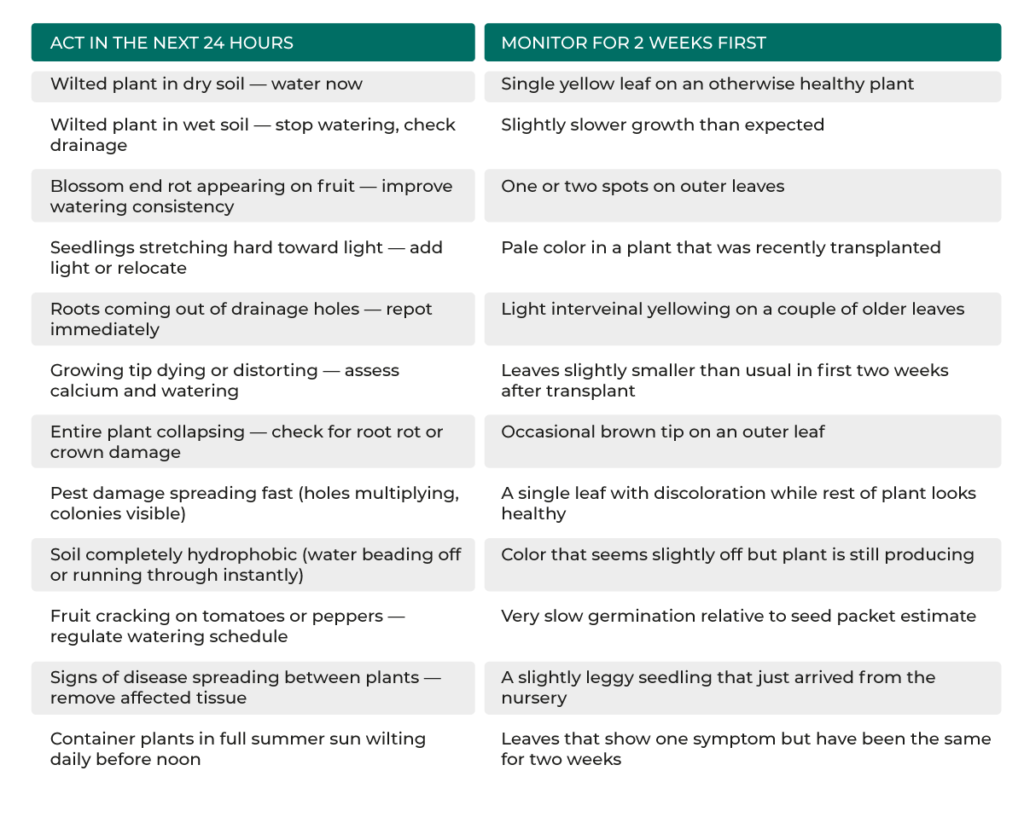
The 24-Hour vs. 2-Week Action Table

Not everything needs action right now. Part of using your three sensors is knowing what to act on immediately and what to monitor and reassess. Reacting too quickly to every symptom creates new problems.

FARMER TIMING RULE: A symptom that appeared today and is changing fast is an emergency. A symptom that has been the same for two weeks probably won’t kill the plant this week. Prioritize moving problems over static ones.

SECTION 7

When to Pull the Crop and Move On

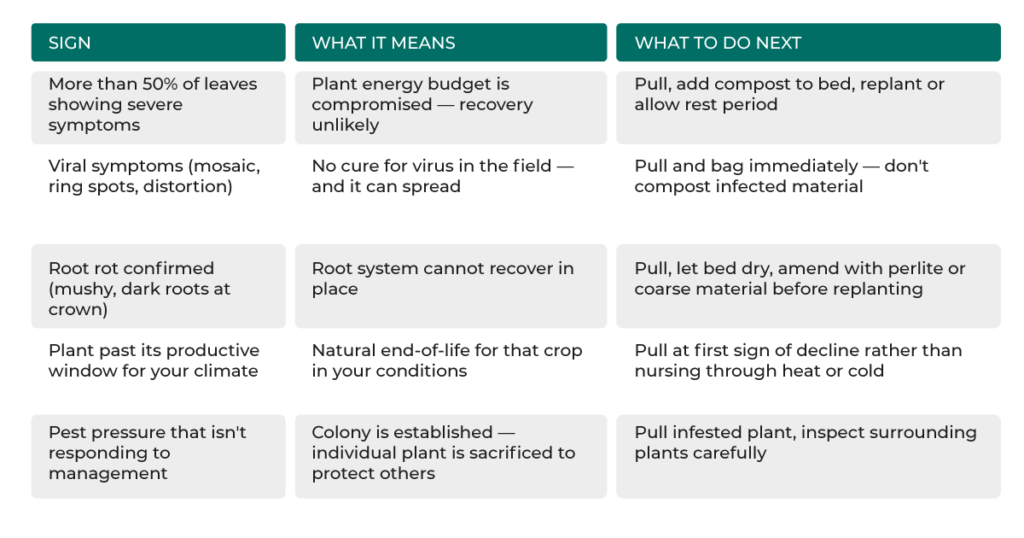
This is the section most home growers skip. Nobody wants to pull a plant they’ve invested weeks in, but one declining plant can hold back an entire bed, harbor disease, attract pests, and delay your next more productive planting. Farmers know when to cut losses. You need to develop that instinct too.

The Math on Pulling

A tomato plant that peaked three weeks ago and is now declining is not going to recover to peak production. Every week it stays in the bed is a week of prime growing space, water, and nutrients spent on diminishing returns. A fresh transplant of the same variety would be producing well within 6–8 weeks. Do that math before you decide to nurse a sick plant through another month.

SUNK COST WARNING: The time and money you’ve already spent on a plant are gone whether you pull it or not. The only question is: what will this space produce if I pull now vs. if I hold on? Make that calculation forward, not backward.

Pull the Crop When You See These Signs
After You Pull — What to Do Right
  • Remove as much root material as you can, especially if disease was involved.
  • If the plant was diseased or pest-infested: bag it and trash it. Do not compost.
  • If it was healthy but simply done: chop and drop the biomass into the bed or compost pile.
  • Amend the bed before replanting, add compost, check moisture, let it settle for a day if you amended with anything that needs time to integrate.
  • Record what happened in your garden log,l season, crop, symptom, outcome. That data is gold the next time you grow that crop.

🌴 WARM CLIMATE NOTE: In Florida’s year-round growing climate, pulling an exhausted crop in March sets you up for a much stronger warm-season succession. Most growers hold on too long trying to push through the heat. Pull tomatoes when daytime temps consistently exceed 90°F and the plant has stopped setting fruit, succession with heat-tolerant crops like sweet potatoes, yard-long beans, or Malabar spinach.

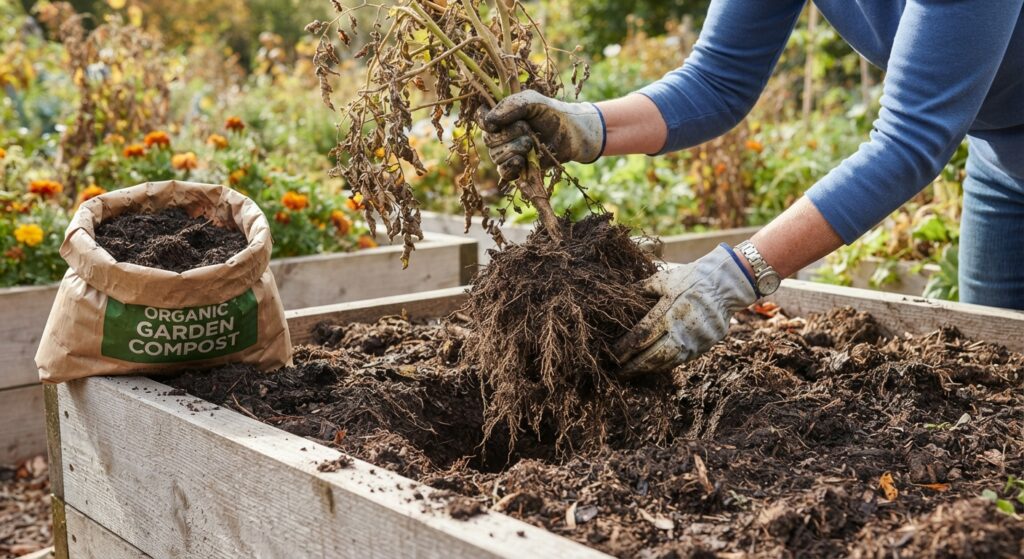
Pulling on time is how you keep the garden moving forward.

SECTION 8

The Neighborhood Garden Mentor — Building Your Help Circle

Even the most experienced growers get stumped. That’s not a failure of the three-sensor system, it’s a sign you’ve reached the edge of what this toolkit can cover. The next step is human expertise, and it’s more available than most home growers know.

Your Local Expertise Network
  • Your county cooperative extension office: Free plant clinics, soil testing, and master gardener programs exist in every Florida county and most states. This is taxpayer-funded expertise — use it.
  • Local nursery staff: The staff at a good independent nursery have seen every local problem. Bring a sample or a good photo.
  • Neighboring growers: If you’re growing in a community garden or neighborhood with active growers, someone nearby has probably seen your exact problem before. Ask.
How to Ask for Help Effectively

A photo and a diagnosis attempt is worth ten times more than ‘my plant looks bad.’ When you reach out:

  • Bring your three-sensor assessment: ‘Soil moisture is good, light is 6+ hours, symptom is on older leaves only.’
  • Describe when the symptom appeared and how fast it’s progressing.
  • Note your soil type and any recent amendments or changes.
  • Photo the whole plant and a close-up of the affected leaf, both views matter.
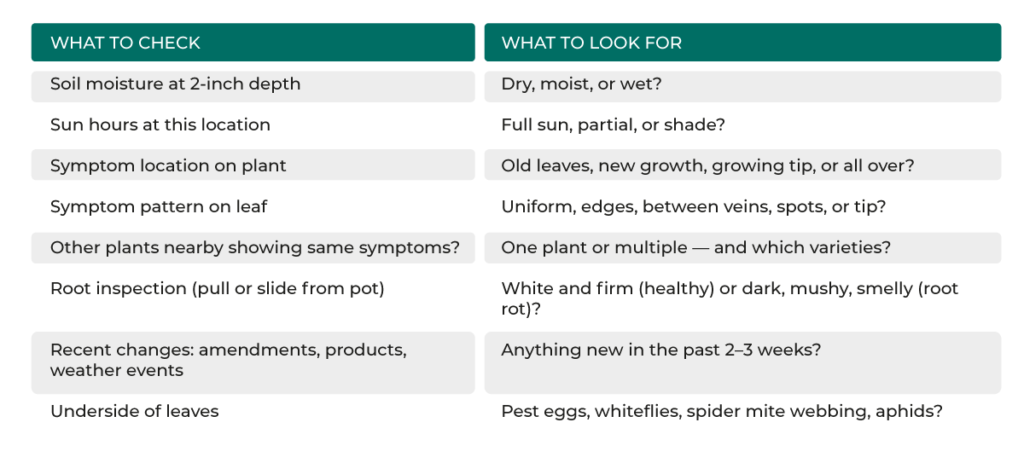
Diagnosis Visit Checklist

If someone comes to look at your garden, or if you’re visiting a neighbor’s, walk through this:

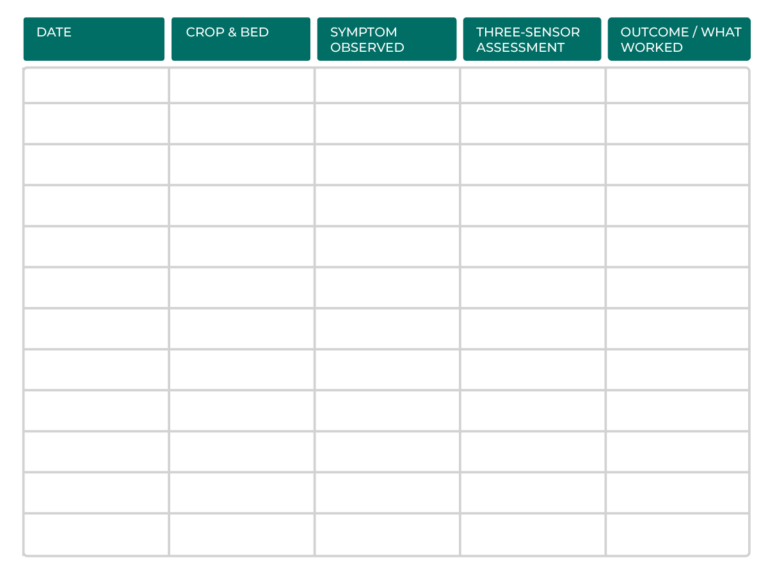
Tracker

My Garden Diagnosis Log

Use this log to track problems and outcomes over time. Your own records are the best reference you’ll ever build.

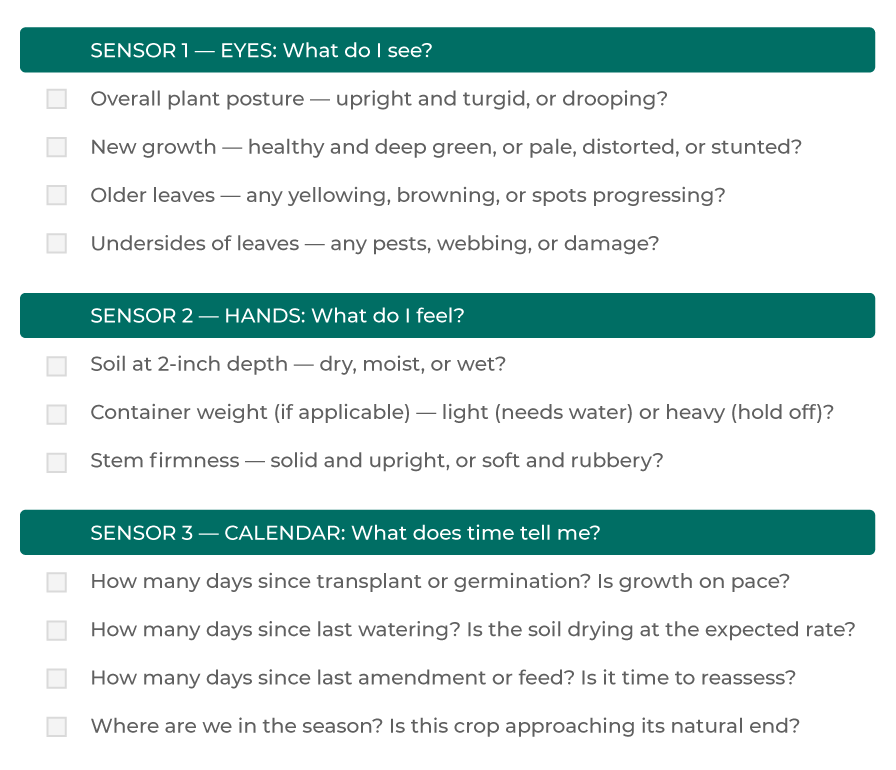
Checklist

The Three-Sensor Daily Check

A 2-minute walk-through each morning prevents 90% of garden emergencies:

TOOLKIT SERIES: The 3-Sensor Garden is part of the NFUSA Home Grower Toolkit Series. Visit neighborhoodfarmsusa.org/knowledge-hub/toolkits-for-growers/ for all available guides, including the Supply Guide for recommended tools and materials referenced throughout this series.

Neighborhood Farms USA | neighborhoodfarmsusa.org | Member Toolkit No. 6 — The 3-Sensor Garden | Funded in part by a State of Florida appropriation.

Join Our Newsletter

Stay informed on our progress and explore the latest insights, research, and real-world models shaping small-scale regenerative farming across the country.