

Toolkits for Growers
Introduction
Pest Management the Way Farmers Actually Do It
Walk into a commercial organic operation and ask the growers how they handle pests. They won’t say they spray on a schedule. They won’t say there is zero tolerance on every bug that they find. They’ll say they scout, know the thresholds, and respond to what’s actually happening, not to what they are afraid might happen.
That system is called Integrated Pest Management, or IPM. It’s been the standard framework for serious organic production for decades. It works by putting prevention first, monitoring second, and intervention last, and by treating intervention as a graduate ladder rather than a first reflex.
This toolkit translates this farmer framework for the home garden. You’ll learn how to set up a garden that’s harder to infest, how to run a five-minute weekly scout that catches problems early, how to identify what you’re actually looking at, and how to decide when a pest population requires action, and what that action should be.
The goal is not a pest-free garden. The goal is a garden that produces food without unnecessary chemical inputs, and a grower who knows the difference between a nuisance and a crisis.
CROSS-REFERENCE: Soil health is the foundation of pest-resistant plants. A crop grown in well-amended, biologically active soil is significantly more resistant to pest and disease pressure than one grown in depleted ground. See Toolkit No. 1: How to Make Great Soil for full soil guidance.
SECTION 1
Prevention First: Building a Garden That's Hard to Infest
The cheapest, most effective pest management happens before any pest arrives. A well-designed garden with the right spacing, airflow, timing, and biodiversity is a much harder target than one that’s crowded, stressed, and monocropped.
Spacing and Airflow
More plants per square foot does not mean more food per square foot. Overcrowded plants compete for light and water, stay damp longer after rain, and create microclimates where fungal disease and soft-bodied pests thrive.
- Follow the crop’s actual spacing requirement, not an optimistic estimate. Squash needs 24–36 inches. Tomatoes need 18–24 inches. Crowding them doesn’t increase yield, it increases disease and pest vulnerability.
- Prune lower leaves and suckers on tall crops to improve ground-level airflow. Wet leaves touching the soil are an invitation to fungal disease and slug damage.
- Orient rows and beds to catch prevailing wind and dry leaves faster after rain or irrigation. In most of the continental US, this means a north-south orientation.
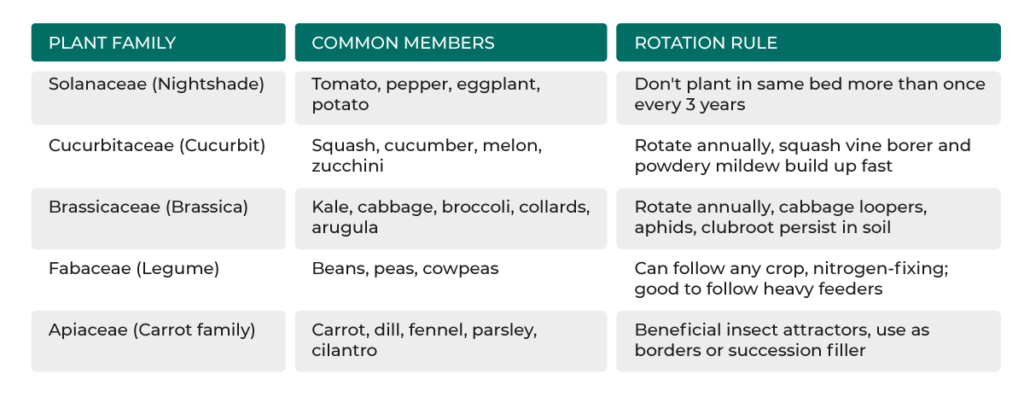
Crop Rotation
Pests and diseases that overwinter in the soil are strongly controlled by rotation, moving crops to different beds each season so that the pest that specialized in one crop’s roots or residue finds nothing to feed on.
Timing and Seasonal Planning
Many pest pressure peaks are predictable. Planting ahead of or after those peaks dramatically reduces exposure.
- Plant brassicas so that heads are forming before peak cabbage looper season, in most climates, this means very early spring or fall plantings.
- Succession plant rather than putting all one crop in at once. Staggered plantings mean that when one planting takes a pest hit, others are at a different, less vulnerable stage.
- Remove crop residue promptly after harvest. Don’t let spent plants sit in the bed, they harbor overwintering pests and disease.
Biodiversity as Pest Control
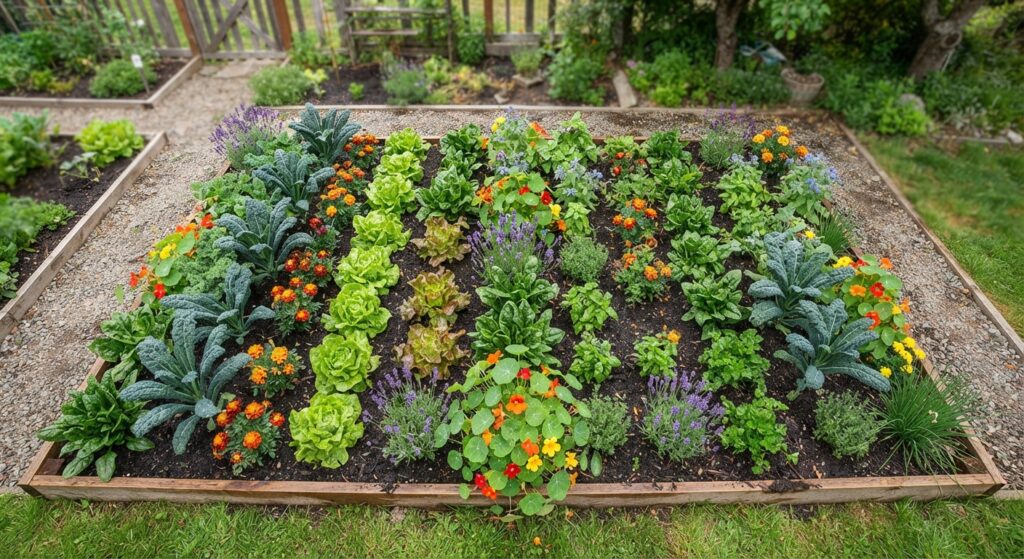
A monoculture, one crop repeated across a large area, is a pest buffet. A diverse polyculture confuses pests, provides habitat for beneficial insects, and distributes risk.
- Interplant flowers among vegetables. Marigolds, nasturtiums, and zinnias attract beneficials and confuse or repel some pests.
- Allow some herbs to flower, basil, cilantro, and dill flowers attract parasitic wasps that prey on caterpillar eggs.
- Avoid spraying anything during bloom time on any plant in your garden, you’re looking at a beneficial insect habitat, not a pest target.
 WARM CLIMATE NOTE: In South Florida and the Gulf Coast, year-round warm temperatures mean pest populations never fully crash between seasons. Prevention practices matter more here than anywhere, there is no cold-weather reset. Pay extra attention to clearing spent crops quickly, maintaining airflow, and rotating beds on a defined schedule even in the short transition between warm and warm-wet seasons.
SECTION 2
Monitoring: The 5-Minute Weekly Scout
You cannot manage what you don’t see. Early detection changes the scale of the problem entirely, a colony of aphids caught in its first week is a five-minute job. The same colony at week three is a whole-bed problem that may require crop removal.
Scouting isn’t a complicated system. It’s a habit: five minutes, once a week, same route, same questions.
How to Scout
- Walk the same path through your garden every time. Move slowly. You’re not just looking for problems, you’re comparing this week to last week.
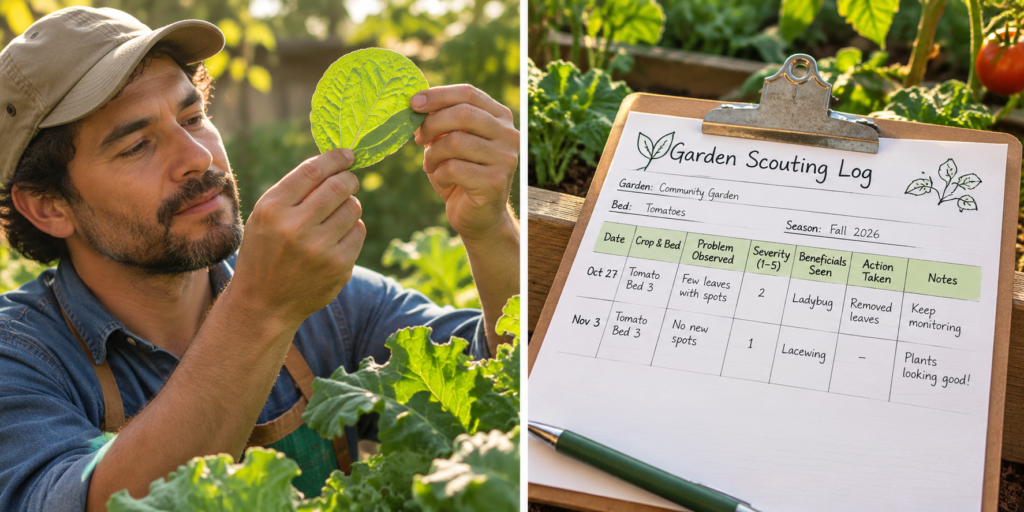
- Look at the undersides of leaves. Most soft-bodied pests, aphids, whiteflies, spider mites, mealybugs, lay eggs and shelter on the underside where it’s protected and more humid.
- Check the growing tips and newest leaves. Many pests concentrate where the plant tissue is softest and most nutritious.
- Examine the soil surface near the base of stems. Fungus gnats, cutworms, and soil-dwelling larvae are visible here.
- Look for indirect evidence: sticky residue (honeydew from aphids or whiteflies), webbing (spider mites), frass/excrement (caterpillars), distorted growth (thrips, viral damage from pest vectors).
- Note predators too. Ladybugs, lacewings, parasitic wasps, and predatory beetles are assets, their presence means the ecosystem is working. Don’t spray when you see them.
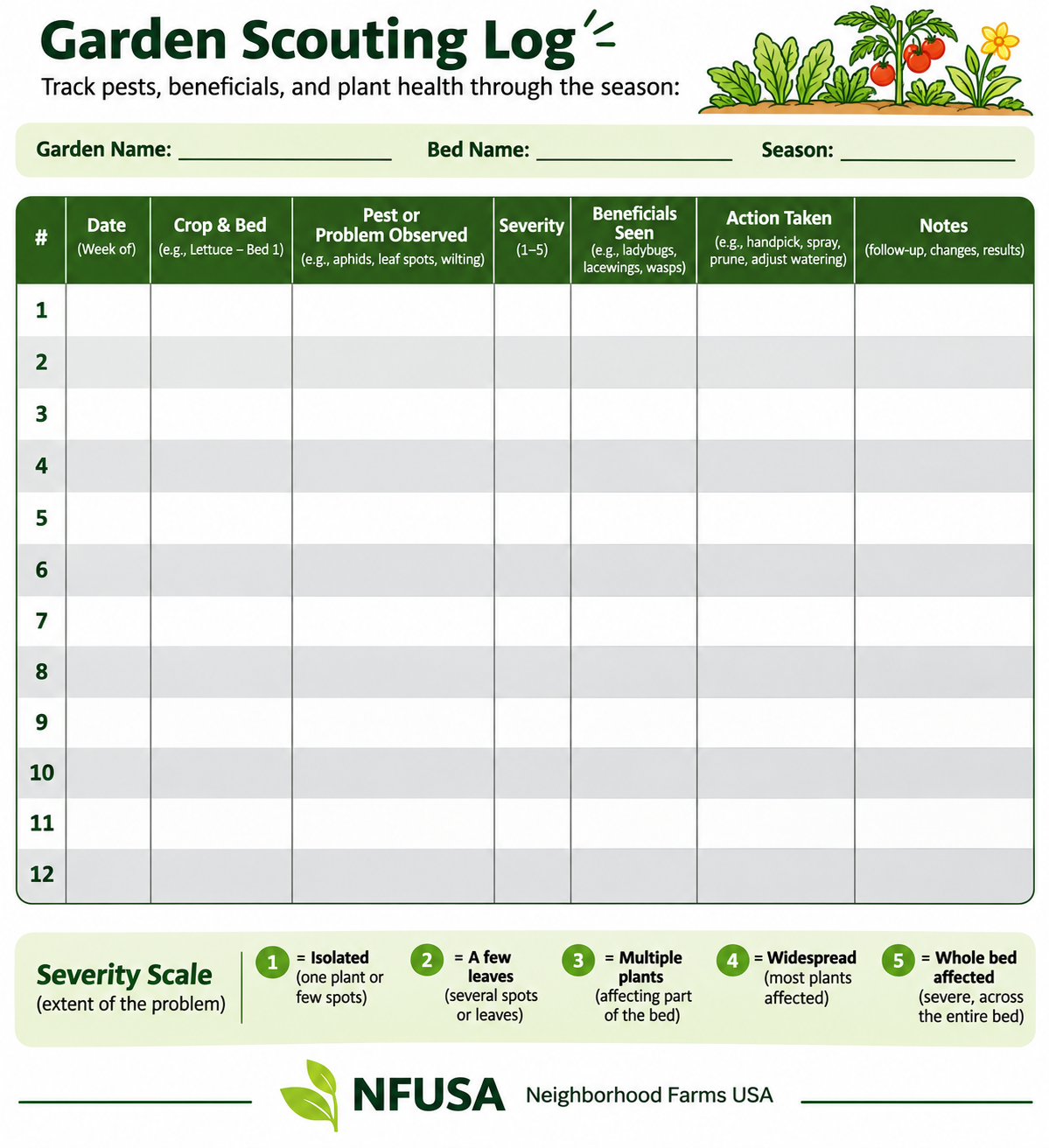
The Scouting Log
You don’t need an elaborate system. A simple weekly entry tells you whether a problem is growing, stable, or resolving, and that’s the information you need to make a decision.
TIMING TIP: Scout in the morning, when temperatures are cooler. Many pests are most active and visible in the early hours before heat drives them into shelter. It also keeps you out of the garden during peak pollinator foraging, which happens mid-morning to afternoon.
🌴 WARM CLIMATE NOTE: In warm climates, scout every 5–7 days year-round, there is no dormant season for pest populations. During the wet season (June–September in Florida), check for disease and fungal problems in addition to insects, as humidity dramatically accelerates both.
SECTION 3
Pest Identification Cards: Know What You're Looking At
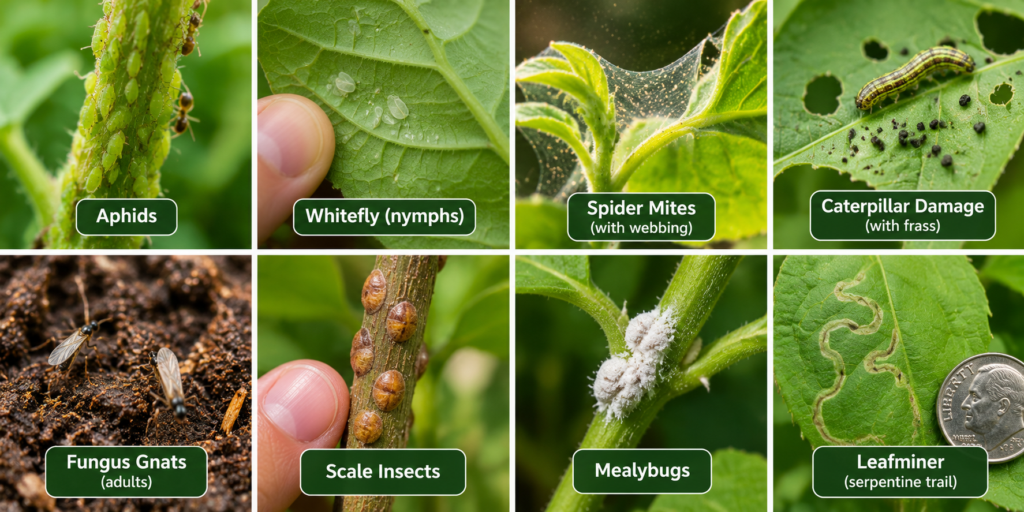
Before you do anything, identify the pest. Treatments for sucking insects are different from treatments for chewing caterpillars, which are different from fungal disease, which is not a pest at all and requires a completely different approach. Misidentification leads to wasted product and continued damage.
PEST ID CARD — APHIDS
Also called: Plant lice, greenflies, blackflies
What to look for: Tiny (1–3mm), soft-bodied, pear-shaped insects. Green, yellow, black, gray, or pink depending on species. Often clustered. Look for shed white skins (exuviae), a sign of an active colony.
Where to look: Undersides of leaves, growing tips, stems, especially on new soft growth. Colonies build fast.
Damage caused: Piercing-sucking damage causes curled, distorted, yellowing leaves. Secrete sticky honeydew that grows black sooty mold. Can vector plant viruses.
Action threshold: Act when you see a colony, don’t wait. A small cluster on one tip in week one becomes a whole-plant infestation by week three in warm weather.
First response: Strong water spray to dislodge. For persistent colonies: insecticidal soap spray to the underside of leaves. Check for ants farming the colony and remove them first, ants protect aphids from predators.
PEST ID CARD — WHITEFLIES
Also called: Silverleaf whitefly, greenhouse whitefly
What to look for: Tiny white moth-like insects (1–2mm) that fly up in a cloud when you disturb a leaf. Nymphs are flat, oval, and scale-like, pale yellow, attached to leaf undersides.
Where to look: Leaf undersides, especially on tomatoes, peppers, squash, sweet potato, and most warm-season vegetables.
Damage caused: Sucking damage causes yellowing, wilting, reduced vigor. Heavy infestations stunt plants. Honeydew leads to sooty mold. Some species vector serious viruses.
Action threshold: Act at first adult sighting, whitefly populations double every 10–14 days in warm weather. Don’t wait for visible damage.
First response: Yellow sticky traps near plants to monitor and reduce adult population. Insecticidal soap to undersides of leaves, targeting nymphs. Reflective mulch deters adults. Remove heavily infested lower leaves.
PEST ID CARD — SPIDER MITES
Also called: Two-spotted spider mite, red spider mite
What to look for: Barely visible to the naked eye, look for very fine stippling (tiny pale dots) on leaves, and fine webbing on leaf undersides and between stems. Mites are visible under a 10x hand lens as tiny moving dots.
Where to look: Undersides of leaves, especially in hot, dry conditions. Tomatoes, cucumbers, beans, and strawberries are common hosts.
Damage caused: Stippled, bronzed, or silvery leaf surface. Severe infestations cause leaf drop. Populations explode in hot, dry conditions (above 85°F) or after broad-spectrum sprays kill predators.
Action threshold: Act when stippling appears on more than 2–3 leaves. Mite populations can triple in less than a week in heat.
First response: Strong water spray to undersides of leaves daily for several days (mites hate water). Increase humidity if container growing. Neem oil or insecticidal soap to undersides. Avoid broad-spectrum sprays that kill predatory mites.
PEST ID CARD — THRIPS
Also called: Florida flower thrips, western flower thrips
What to look for: Very small (1–1.5mm), slender, fast-moving insects. Silver or tan. Difficult to see, tap flower or leaf over white paper to see them fall. Look for silver streaks and distorted or scarred tissue.
Where to look: Inside flowers (primary feeding site), growing tips, leaves. Most damage happens inside blooms before you see the pest.
Damage caused: Silver or bronze streaking on leaves, distorted petals and growing tips, premature flower drop, scarred fruit surfaces. Also vectors serious plant viruses including TSWV.
Action threshold: Act when you see distorted tips or streaked leaves on multiple plants, thrips are often invisible until damage is visible.
First response: Blue sticky traps (thrips are attracted to blue). Spinosad-based spray (OMRI-listed) for active infestations, apply late evening to protect pollinators. Remove and bag heavily damaged tissue.
PEST ID CARD — CATERPILLARS (LEPIDOPTERA LARVAE)
Also called: Cabbage looper, tomato hornworm, corn earworm, armyworm, cutworm
What to look for: Varies by species from small green worms (loopers) to very large green horned caterpillars (hornworms). Look for frass (dark green or brown pellets) on leaves and at the base of stems.
Where to look: On or inside leaves, stems, fruit, and growing tips. Cutworms work at soil level at night, look for severed seedlings at the base.
Damage caused: Chewing damage, holes in leaves, eaten fruit, severed stems. Hornworms can defoliate a tomato plant in days. Earworms enter fruit directly.
Action threshold: Act when you see feeding damage on multiple leaves or plants. One hornworm per plant is your action threshold, they’re big feeders.
First response: Hand-pick large caterpillars and hornworms (wear gloves, drop in soapy water). Bt (Bacillus thuringiensis) spray for widespread small-caterpillar pressure, it’s specific to Lepidoptera larvae and safe for everything else. Apply in late afternoon.
PEST ID CARD — FUNGUS GNATS
Also called: Sciarid flies, soil gnats
What to look for: Tiny dark flies (2–3mm) hovering near the soil surface or on soil in containers. Adults are mostly a nuisance; larvae are the problem, white maggots in the top 2–3 inches of soil feeding on roots.
Where to look: Top 2–3 inches of soil, especially in containers with consistently moist, organic-rich growing media. Worse in overwatered conditions.
Damage caused: Larvae damage root tips and root hairs, reducing uptake of water and nutrients. Seedlings and young plants are most vulnerable, wilting and yellowing without obvious above-ground cause.
Action threshold: Act when you see adults emerging regularly and the soil stays wet. If you’re seeing wilting in well-watered seedlings, check the soil for white larvae.
First response: Let the top 2 inches of soil dry completely between waterings, this breaks the larval cycle. Yellow sticky traps to capture adults. Beneficial nematodes (Steinernema feltiae) applied to soil for serious larval infestations.
PEST ID CARD — SCALE INSECTS
Also called: Soft scale, armored scale, brown soft scale
What to look for: Flat, oval, immobile bumps on stems and leaves, tan, brown, or white. Look like part of the plant until you try to scrape one off. Soft scale looks like small brown domes; armored scale has a flat, waxy cover.
Where to look: Stems, leaf midribs, and leaf undersides. Particularly common on woody herbs, citrus, and ornamentals near vegetable beds.
Damage caused: Sucking damage weakens plants over time. Honeydew leads to sooty mold. Heavy infestations cause branch dieback and stunted growth.
Action threshold: Act when you see more than a few clusters on the same plant. Scale is slow-moving but persistent, it doesn’t self-resolve.
First response: Scrape off by hand with a soft toothbrush or cloth. Neem oil or horticultural oil spray smothers immature crawlers (the mobile phase). Multiple applications two weeks apart.
PEST ID CARD — MEALYBUGS
Also called: Citrus mealybug, grape mealybug
What to look for: White, waxy, cottony clusters at leaf axils, stem joints, and root crowns. Oval, segmented insects visible inside the cottony mass. Slow-moving.
Where to look: Protected spots: where leaves meet stems, at the base of plants, in dense foliage. Roots (root mealybugs are an underground version that only shows when you pull the plant).
Damage caused: Sucking damage causes yellowing and leaf drop. Heavy infestations cause significant plant decline. Honeydew leads to sooty mold.
Action threshold: Act at first sighting, mealybugs spread plant-to-plant slowly but build serious populations if ignored.
First response: Isolate affected plants if possible. Dab individual clusters with isopropyl alcohol on a cotton swab. Insecticidal soap or neem oil spray for broader coverage. Predatory insects (Cryptolaemus mealybug destroyer) for serious infestations.
PEST ID CARD — LEAFMINERS
Also called: Serpentine leafminer, vegetable leafminer
What to look for: Pale, winding tunnels visible inside leaves, look like thin white or tan lines tracing a path through the leaf tissue. The larvae are inside the leaf, not on the surface.
Where to look: Inside leaf tissue of tomatoes, peppers, lettuce, beets, spinach, and many other vegetables. Look for the distinctive winding mine pattern on the upper leaf surface.
Damage caused: Mining creates visible trails and weakens the leaf’s photosynthetic capacity. Severe infestations cause early leaf drop. Rarely kills an established plant but can reduce yields.
Action threshold: Act when more than 20–30% of leaves on a plant show active mines. One or two mined leaves on a healthy plant is a monitoring note, not a crisis.
First response: Remove and dispose of heavily mined leaves, do not compost. Beneficial parasitic wasps naturally control leafminers in an undisturbed ecosystem. Avoid broad-spectrum sprays that kill the parasitoids. Spinosad is effective for severe cases.
SECTION 4
Action Thresholds: The Number That Tells You to Act
This is the concept that most separates farmers from anxious home growers: not every pest sighting is a pest problem. An action threshold is the population level or damage level at which the economic (or in our case, harvest) cost of doing nothing outweighs the cost of intervening.
Below the threshold, you monitor. Above it, you act. The threshold keeps you from spraying a healthy garden because you saw one aphid.
FARMER PRINCIPLE: Your goal is not a pest-free garden. Your goal is a productive, harvest-quality garden. A few aphids on one plant while your beneficial insect population is building is not a crisis, it’s the ecosystem working. Intervening too early kills the beneficials that would have solved the problem for you.
Action Threshold Quick Reference
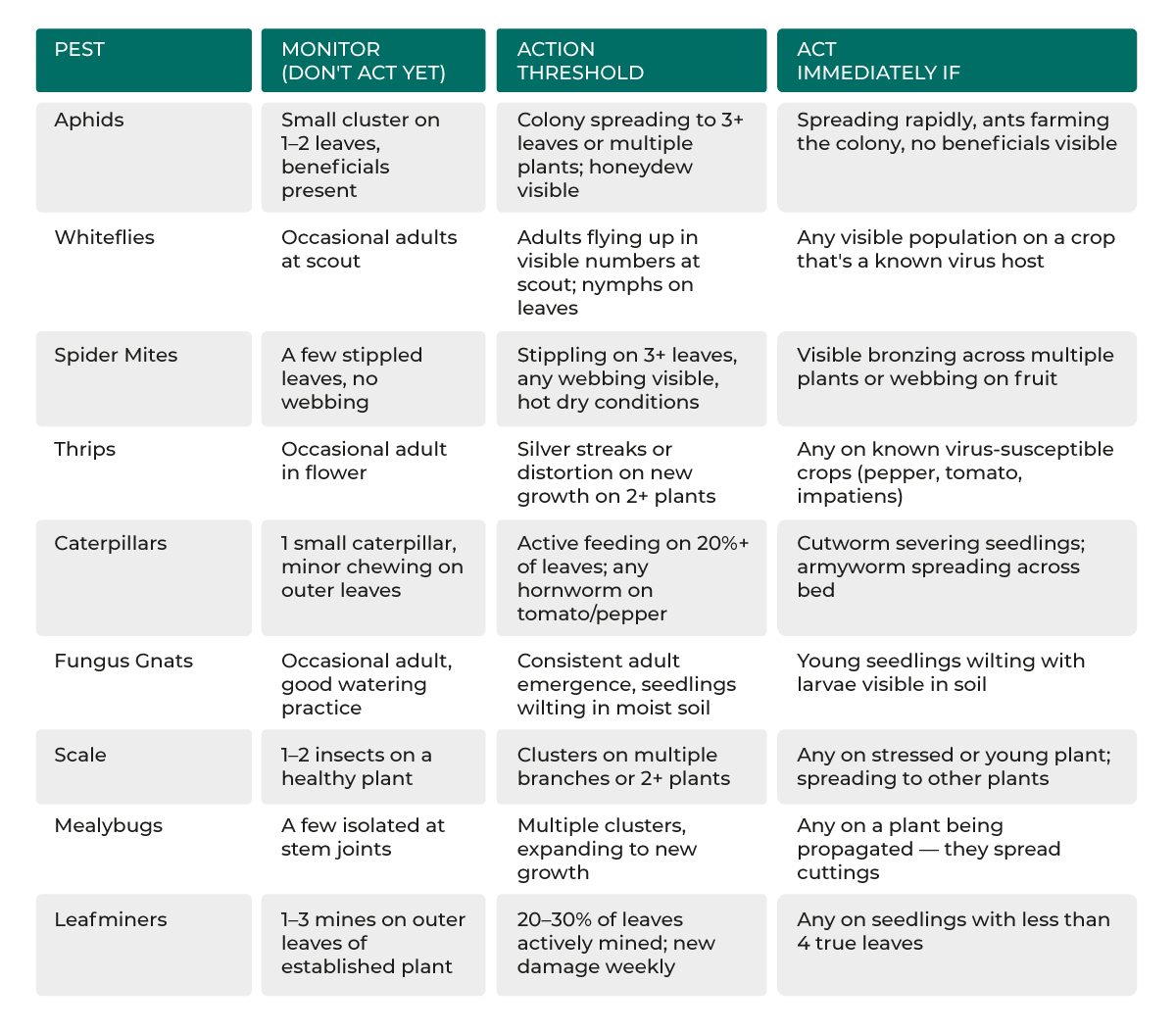
THRESHOLD EXCEPTION: Virus-vectoring pests, thrips, whiteflies, and some aphid species, have near-zero thresholds on susceptible crops. One whitefly on a young tomato or pepper seedling can introduce a virus that will ruin the entire plant. Act fast on these, especially in warm climates where vector populations are year-round.
SECTION 5
The Response Ladder: Escalate, Don't Start at the Top
Once you’ve confirmed a pest and it’s at or past threshold, work up the ladder. Start at the bottom rung. Only move up when the lower rung isn’t working.
This isn’t about being restrictive with sprays, it’s about being effective. The right tool for the right situation is almost always the most effective one. Broad sprays kill beneficials, create resistance, and contaminate the harvest. Targeted responses preserve your ecosystem and solve the problem faster.
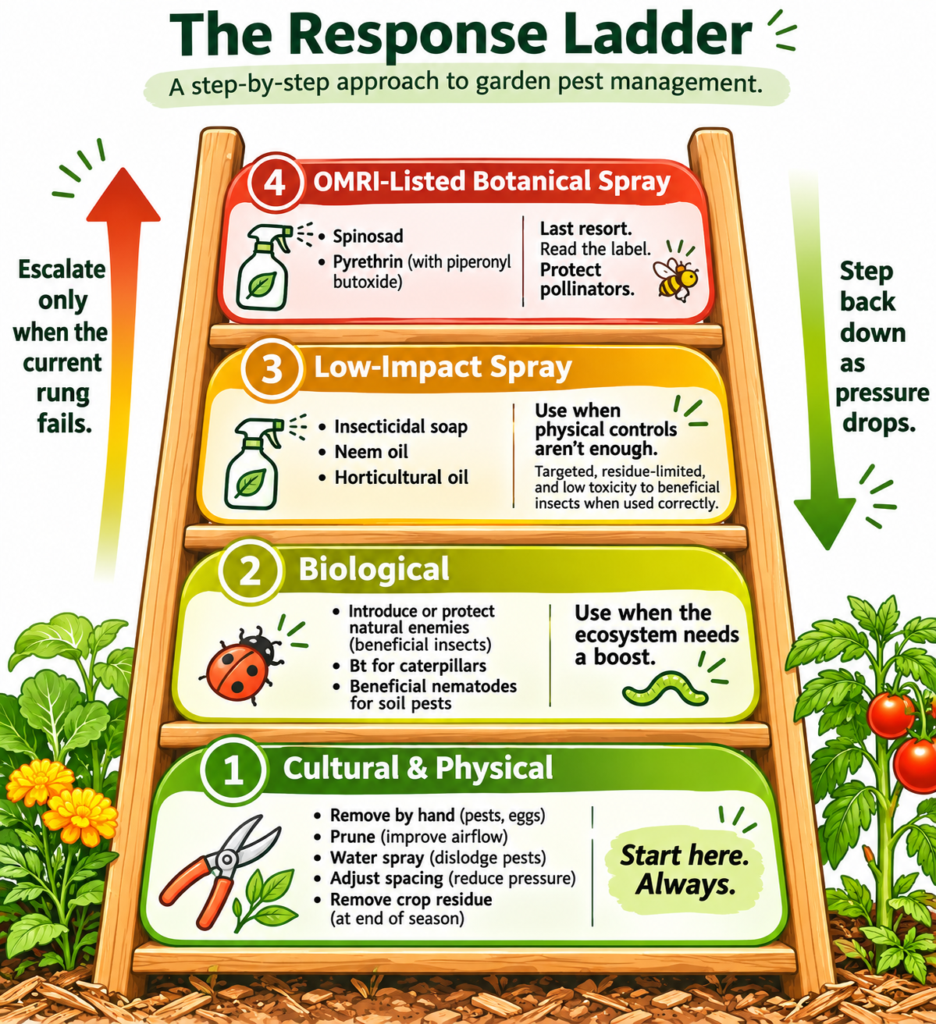
Rung 1: Cultural and Physical Controls
- Hand-pick large pests (hornworms, caterpillars, squash bugs). Drop in soapy water. Wear gloves.
- Strong water spray to dislodge aphids, spider mites, and whitefly adults. Repeat daily for 3–5 days.
- Prune and remove heavily infested leaves, dispose in trash, not compost if pest pressure is serious.
- Row cover fabric to exclude flying pests (caterpillar moths, whitefly adults, leafminer flies). Must be secured at edges.
- Sticky traps (yellow for whiteflies and fungus gnats, blue for thrips) to monitor and reduce adult populations.
- Copper tape or diatomaceous earth for slugs and snails around bed edges.
Rung 2: Biological Controls
- Protect what’s already there: avoid any spray during the day when beneficials are active. If you must spray, spray after dark.
- Introduce predatory insects: ladybugs (aphids), lacewings (aphids, thrips, mites), Cryptolaemus (mealybugs), predatory mites (spider mites).
- Bt (Bacillus thuringiensis var. kurstaki): bacteria specific to caterpillar larvae. Spray foliage, especially undersides. Apply in late afternoon, UV degrades it.
- Beneficial nematodes (Steinernema feltiae): for fungus gnat larvae and soil-dwelling pests. Apply to moist soil, keep moist for 48 hours.
- Encourage natural predators with habitat: flowering plants, reduced disturbance, no broad-spectrum sprays.
Rung 3: Low-Impact Sprays
- Insecticidal soap: contact-kill only, no residue. Works on soft-bodied insects, aphids, whiteflies, spider mites, mealybugs. Must hit the pest directly to work. Refer to the NFUSA Supply Guide for product recommendations.
- Neem oil: disrupts insect growth and reproduction, some repellent effect. Also has antifungal properties. Apply in the evening. Can burn foliage in direct sun or high heat.
- Horticultural oil (lightweight): smothers scale and mealybug crawlers, spider mite eggs. Apply when temperatures are between 40–85°F. Do not use when frost is expected within 24 hours.
Rung 4: OMRI-Listed Botanical Sprays
- Spinosad: derived from soil bacteria, highly effective on caterpillars and thrips. Apply in late evening, toxic to bees until dry. Do not apply on open flowers. Check for bee activity first.
- Pyrethrin: fast knockdown on a broad range of insects, including beneficials. Use only as a last resort. Short residual. Apply after dark. Will affect pollinators if applied during the day.
- Read the label every time, even if you’ve used the product before. Concentration, application rate, pre-harvest intervals, and environmental restrictions vary by formulation.
RESISTANCE WARNING: Rotating spray classes matters. If you use insecticidal soap every week all season, pest populations can develop tolerance. Rotate between classes: physical → soap → neem → soap → biological. Never spray the same product more than 2–3 applications in a row without switching modes of action.
SECTION 6
Building a Spray Schedule Framework
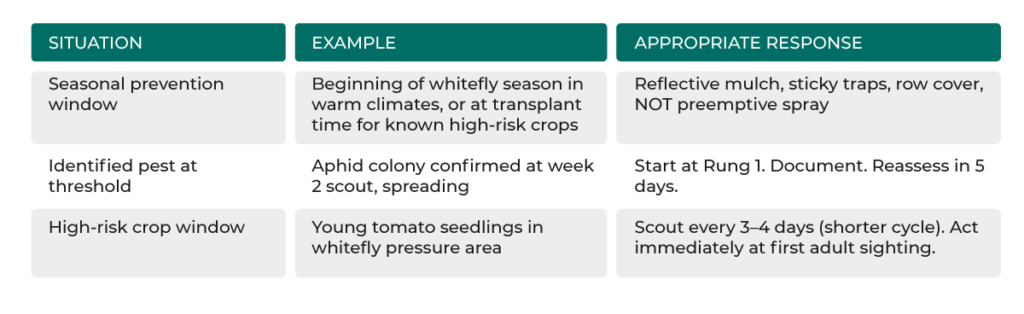
The biggest mistake home growers make with pest management is spraying on a calendar rather than on a scout. A spray schedule tells you when you’re allowed to spray, not that you should spray regardless of what you’re seeing.
Build your spray approach around three situations: preventing a known seasonal problem, responding to an identified pest at or above threshold, and protecting a vulnerable crop at a high-risk window.
Three Legitimate Spray Situations
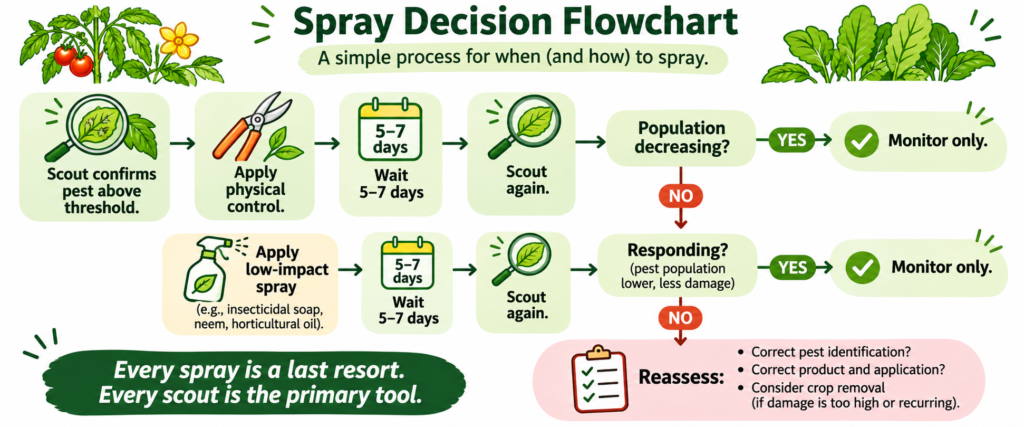
Sample Spray Decision Sequence
- Scout confirms pest above threshold.
- Apply Rung 1 response (physical removal, water spray).
- Scout again in 5–7 days. If population is decreasing: continue monitoring, no spray.
- If population is stable or increasing: apply Rung 3 spray (soap or neem). Document.
- Scout in 5–7 days. If responding: continue monitoring only.
- If not responding after 2 applications: reassess identification, consider Rung 4, or consider crop removal.
🌴 WARM CLIMATE NOTE: In Florida’s year-round pest season, it’s tempting to spray on a calendar because something is always present. Resist this. Calendar spraying increases resistance, kills beneficial insect populations that are trying to establish, and costs money on interventions that aren’t needed. Scout, set your thresholds, and respond to what’s actually there.
SECTION 7
Protecting Pollinators: Non-Negotiable
Every organic pest management commitment is incomplete without a pollinator protection protocol. Many of the sprays that control pest insects, including organic-approved ones, are toxic to bees, butterflies, and other pollinators that are essential to your garden’s productivity. Losing your pollinators while controlling your pests is not a trade-off that works out.
The Basic Rules
- Never spray any plant that has open flowers during daylight hours. This includes weeds in flower near your garden. Foraging bees are on open flowers from roughly mid-morning to late afternoon.
- If you must spray a flowering plant, apply after dark. Most pollinators are not active after dusk. Allow at least 4 hours of dark before sunrise, this rules out very late evening applications in summer when nights are short.
- Spinosad and pyrethrin are especially hazardous to bees before they dry. The dry residue is significantly less toxic, but still best avoided on open flower surfaces.
- Neem oil and insecticidal soap have relatively low toxicity to bees at labeled rates when dry. They’re still safer applied in the evening when bees aren’t foraging.
- Never spray during windy conditions. Drift carries spray into non-target areas and onto flowers you didn’t intend to treat.
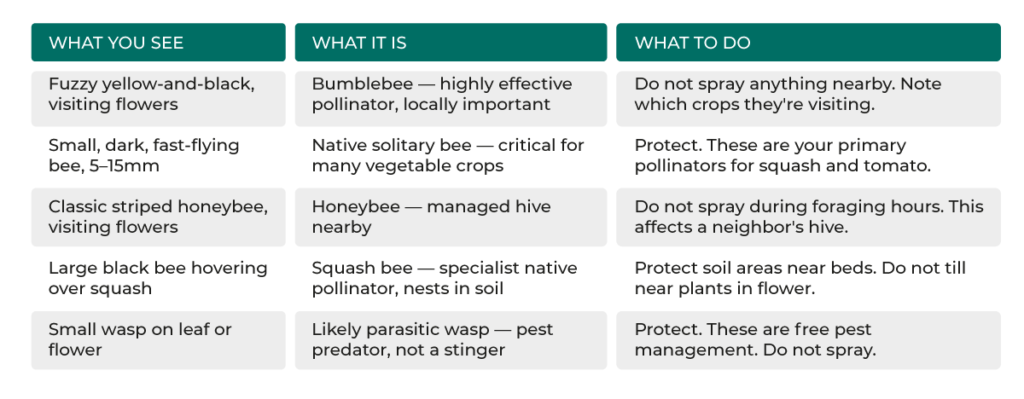
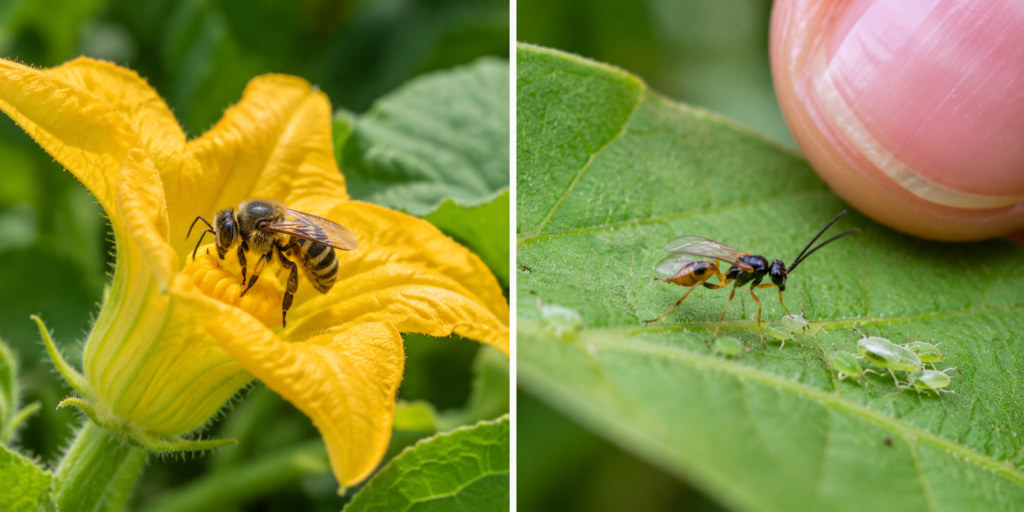
Identifying Pollinators in Your Garden
🌴 WARM CLIMATE NOTE: Florida has 315+ native bee species, one of the most diverse native bee populations in the country. Most are solitary ground-nesters and highly sensitive to any soil disturbance or spray drift. Winter in Florida is still pollinator season. Protect accordingly year-round.
SECTION 8
What Works in Humidity — and What Quietly Does Not
Most home garden pest management resources were written for dry climates or for the middle of a temperate growing season. In humid regions, the Gulf Coast, the Southeast, the Pacific Northwest, the calculus changes. Some products break down faster, some pests explode faster, and some practices that work in Colorado are nearly useless in Miami.
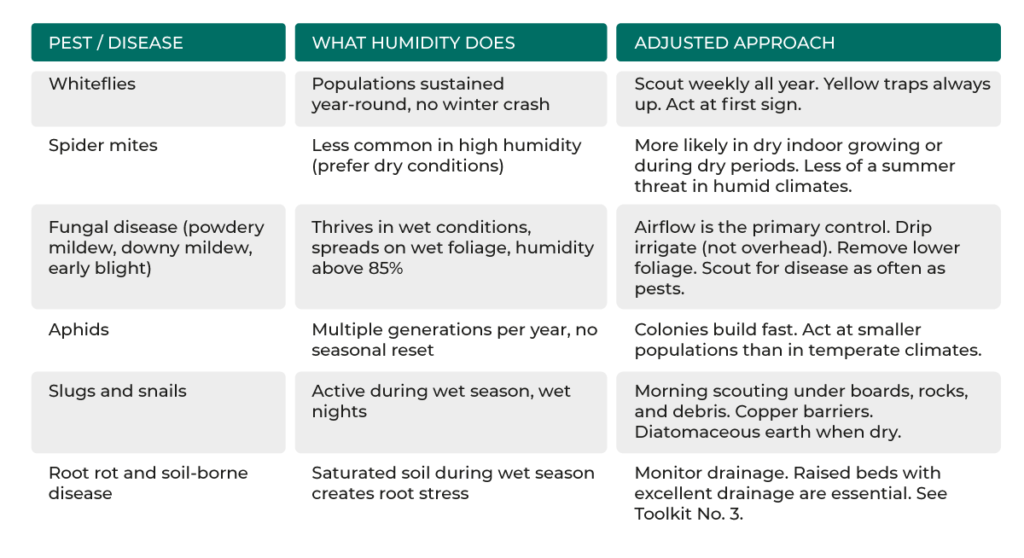
Humidity-Specific Pest Pressure
What Doesn’t Work as Well in Humidity
- Diatomaceous earth: loses effectiveness when wet. Reapply after every rain. Best used under cover or in containers.
- Kaolin clay: similarly disrupted by rainfall. Good in dry periods, limited in the wet season.
- Sulfur-based fungicide: can volatilize and damage plants at temperatures above 90°F — a regular condition in Florida summers. Avoid during peak heat.
- Copper fungicide: can accumulate in soil with repeated heavy applications. Use sparingly and rotate with non-copper options.
- Sticky traps: need to be checked and replaced frequently in humid conditions — traps fill with moisture, debris, and non-target insects quickly.
🌴 WARM CLIMATE NOTE: Florida’s wet season (June–September) means 60+ inches of rain in roughly 4 months. During this period, disease management becomes as important as insect management. Overhead irrigation should stop entirely, use drip or soaker hose only. Prune for airflow aggressively. Accept that some crops (large-fruited tomatoes, for example) are not suited to this season and plan accordingly.
SECTION 9
When to Pull the Crop — and Why It's Often the Right Answer
The best pest management decision is sometimes no management at all, because the right decision is to pull the plant, rest the bed, and start fresh. A grower who can make that call clearly and without sentiment is a more effective grower than one who nurses a failing plant through another month of interventions.
Pest Situations That Usually Mean: Pull
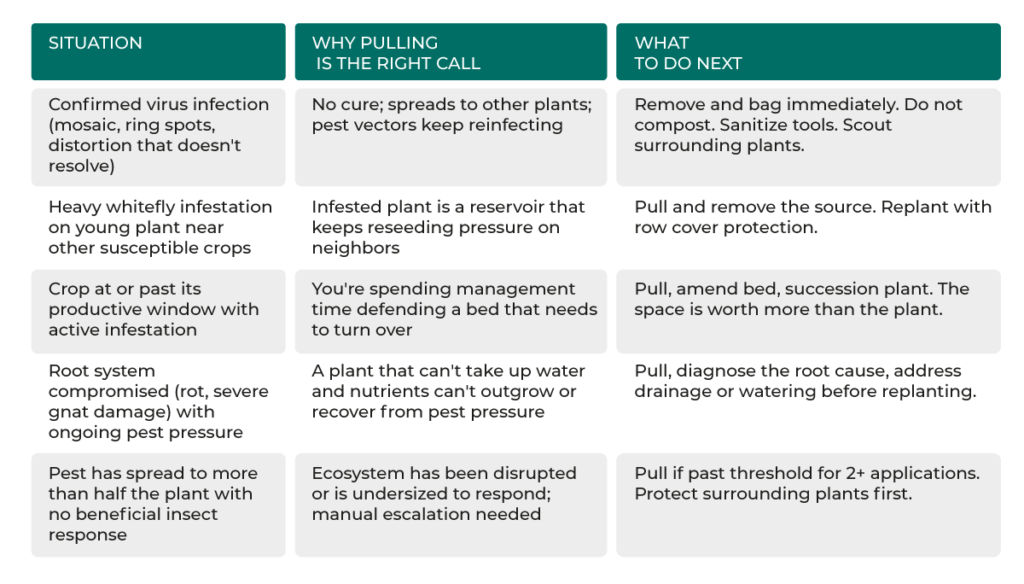
FARMER MINDSET: A plant is not a pet. Attachment to individual plants is normal — you grew it, you watered it, you know it. But the bed is what matters, and the season is what matters. Pulling a compromised plant on time is what lets the next planting succeed.
AFTER PULLING AN INFESTED PLANT: Always inspect the surrounding plants at the base and underside immediately. Pests move when their host is disrupted. Change your gloves or wash hands before touching adjacent plants. Bag and trash, do not compost diseased or heavily pest-infested material.
🌴 WARM CLIMATE NOTE: In year-round warm climates, the decision to pull and replant is less traumatic because the growing calendar has more flexibility. A pulled tomato in March can be replaced with a heat-tolerant crop by April, and back to tomatoes in October. Think in seasons, not in individual plants.
Tracker 8
My Scouting Log — Weekly Record
Use this log to record weekly scout findings across your beds. Your data over time is your most valuable diagnostic tool.
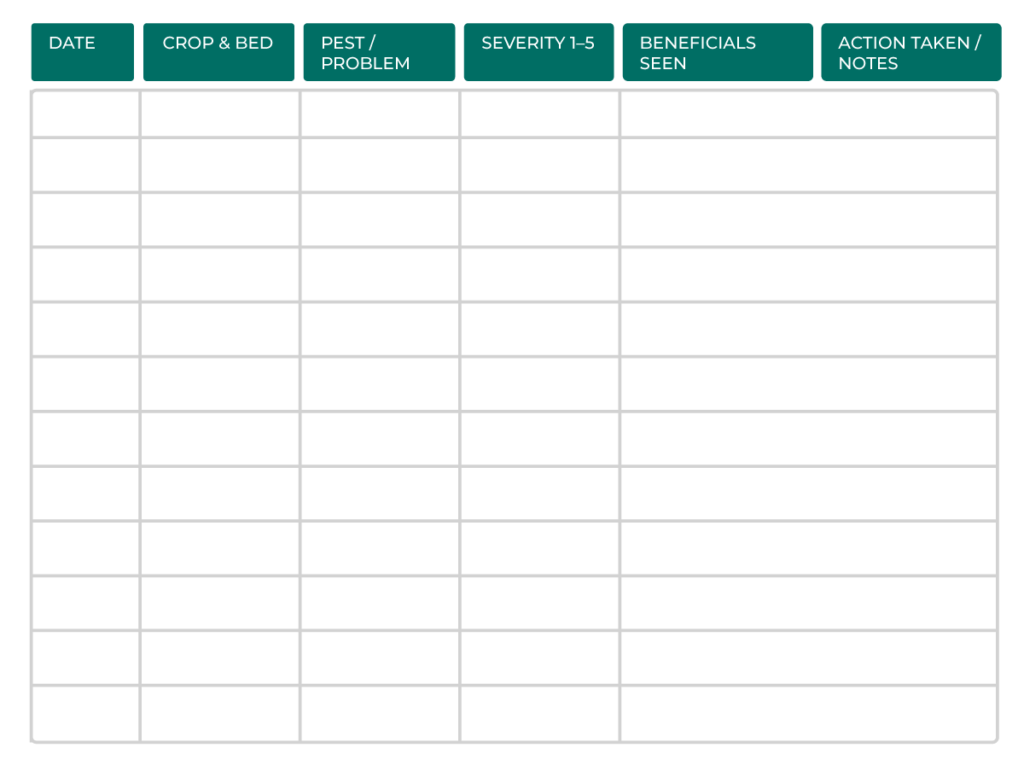
Severity scale: 1 = isolated (1 leaf or stem) | 2 = minor (a few leaves) | 3 = moderate (multiple plants) | 4 = widespread (whole bed) | 5 = severe (crop at risk)
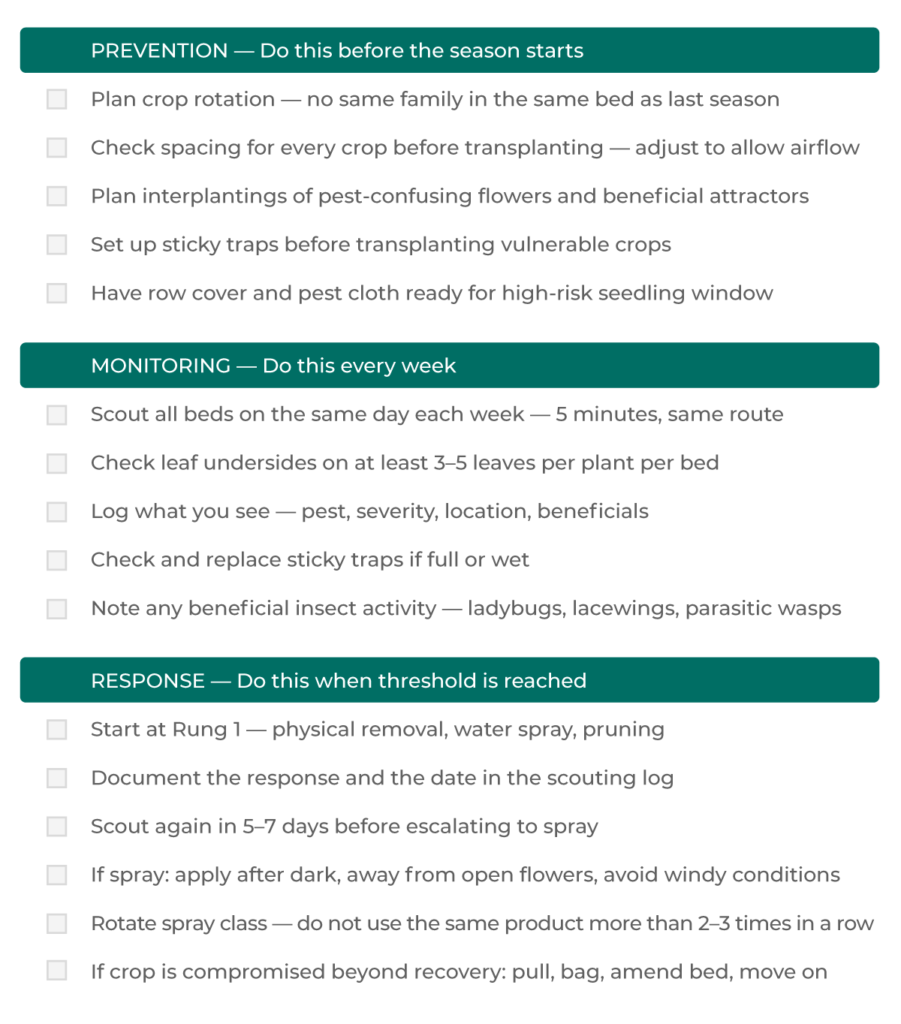
Checklist
IPM Season Checklist
SUPPLY GUIDE: For specific product recommendations referenced in this toolkit — insecticidal soaps, neem oil, Bt, spinosad, beneficial nematodes, and sticky trap options — refer to the NFUSA Supply Guide available at neighborhoodfarmsusa.org/knowledge-hub/.
Neighborhood Farms USA | neighborhoodfarmsusa.org | Member Toolkit No. 7 — The Pest Plan | Funded in part by a State of Florida Appropriation.
Join Our Newsletter
Stay informed on our progress and explore the latest insights, research, and real-world models shaping small-scale regenerative farming across the country.